
In this section of the Warre Hive Construction Guide we will install the completed Warre hive. Once installed, your beehive will be ready for a new package or swarm of bees. Let’s begin!
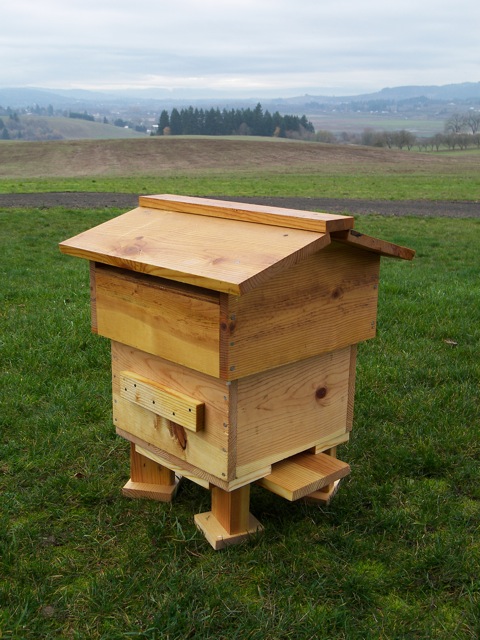
To install a Warre hive, find a good flat area on your property. It should be somewhat shaded, but not so shaded as to be completely blocked from the sun’s warmth. The area that you select should have good soil drainage, and preferably be out of the path of strong prevailing winds. The area in the photo below satisfies all of the above criteria.
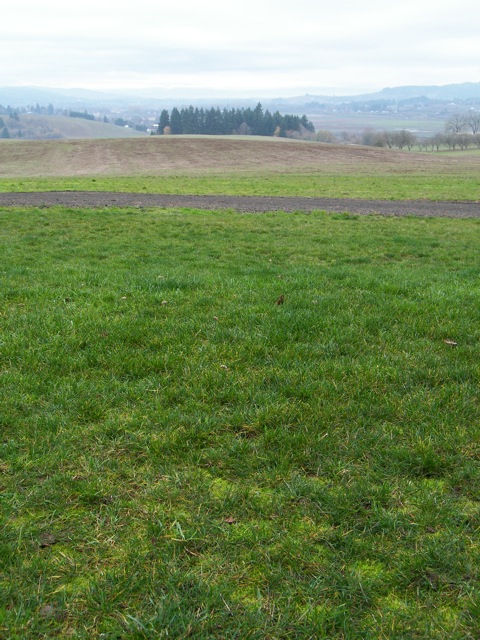
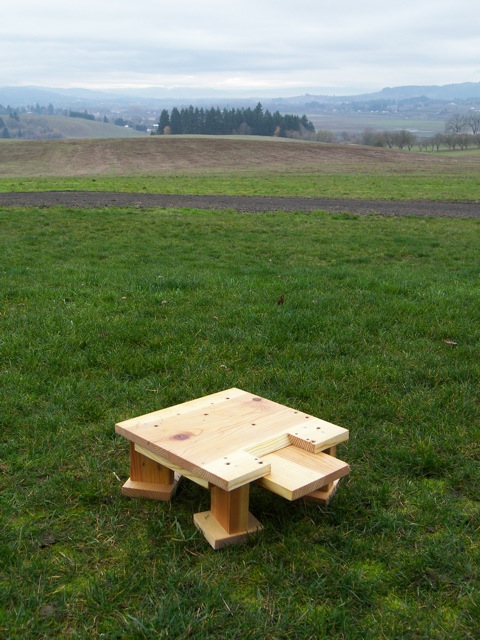
Place your Warre hive floor on a level space of ground in the area you have selected. Use a carpenter’s level to make sure the floor is level. You can lay the floor right on the ground, or you can put the feet on bricks or cement blocks. Alternately, you can build the floor without feet and just use a stand of your own construction to support your Warre hive.
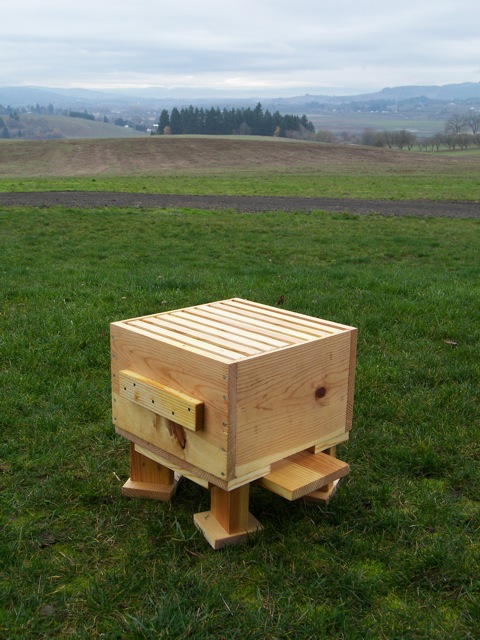
Next, place your Warre hive box onto the floor. Situate the hive box so that there is an even overlap on all sides of the box. The box is designed to be slightly larger than the floor. This prevents water from running down the sides of the box and into the hive via the floor.
Go on to the next page where we will finish installing the Warre Hive.




 The Bee Space
Thank you so much for all the detailed info re construction of Warre hive. It must have taken you ages. We’re going to start building after Xmas and are giving details of this site to all our chums- French and English speaking.
Many thanks once again
Joyce – Thank you for your comments! I am glad you have found the site to be helpful.
What an astonishing set-up. I and my son plan on beekeeping this spring in Northern Illinos, and while searching through so many web pages for an affordable starter, it becomes overwhelming. Well, I decided to do other searches and came across “beespace.” I found this to be very interesting to give a try. Was not able to browse the entire book by Warre, but for the foundation pieces attached to the box, what is applied to them or how, to attract the bees to begin building? Do you also have a hive top feeder built to get a better idea of how they will feed? I have added your site to my links for beekeeping and hope many more interested will choose to look you up.
Thanks
Keith
Keith – If you want to, you can coat the bottom of the top bars with beeswax to help the bees start building comb from them. However, this is not necessary. My bees build comb attached directly to the top bar.
No, I do not currently have a top feeder built. Here is another comment about top feeders for you. And here is a post on a bottom feeder you might find helpful.
What a beautiful hive design!
Sigh. I wish I had time to get back into bees.
bug_girl – I didn’t know that you used to keep bees! So you are probably familiar with the Langstroth hives with frames. The Warre Hive is a low maintenance, and requires about half to a quarter the work time as a Lang. Who knows, you might have time for bees after all!
Thanks!
sohbet – Your Welcome!
Great layout Nick, takes lots of work. I’ll be retrofitting some Langs this spring, so visually, this was a huge help. Thanks for sharing.
Margie – Glad to share, Margie! Have fun reworking your Langstroth hives. Let me know how it goes for you!
Hi Nick,
Thanks for your great plans, I will be building one of these for sure. One question though, without a brood chamber and queen separator how does the Warre Hive keep the grub cells separate form the honey cells?
Nick – I like your name. 🙂 Your comment prompted me to answer your question with this blog post. Thanks for the great question!
I just finished assembling the hive boxes and am in the process of painting them.
We had a windstorm the other night and I got to thinking about how to keep the hive from tipping over. Any good suggestions on how to anchor the hive down so that it does not blow over?
I plan to set the hive on a small table that I constructed that will sit about 2 feet of the ground.
Thanks,
Benjamin
Newberg, Oregon
Benjamin – Hello neighbor! I live about 25 minutes from you. We sure did have a wind storm, didn’t we? My Warre hives are still standing just fine. 😉
If you want to anchor your hives, I would recommend some 1″ by 6′ ratchet straps from a hardware store. (such as the straps here: http://www.americanratchetspecialties.com) They have metal hooks on one end of the strap and also on the ratchet. Just pass this soft web strap over the top of the roof, and ratchet your beehives to your hive stand. Voila! Your beehives are now anchored.
Benjamin –
As per your question regarding wind and the chance of a hive blowing over, here’s my solution:
Happy beekeeping!
Nick, nice job! Seeing this laid out so clearly now I am starting to understand how the warre system works. I’m eager to have a warre this spring and take the next step beyond langs and horizontal top bars. I’m liking everything I read about the warres.
warmly, Jacqueline
Jacqueline – Thanks so much for your comment!
Nick,
New to the bee keeping but want to know more. I’ve been doing some reading and was wondering the difference in this method as opposed to the other. Also are there different plans available for making this bee hive? I dont’ follow these plans. Thanks for you time.
Craig
Craig – The major differences between Langstroth beekeeping and Warre beekeeping…that is a weighty topic! The biggest differences is the hands-off method of Warre. You do a lot more observing and working with the bees, and a lot less opening and inspecting the hive. The Warre hive is designed to mimic the natural cavities that bees seem to like best in nature. The major difference is that it allows the bees to create natural comb cell size to their own specifications, instead of us forcing them into a pre-pressed man-made foundation size.
hi nick i have nearly finished building the hive my question is where to place the wax in the begining is there any pictures to show how and where to place the wax on the bars. my other question is what is the point of the quilt? and when is the best time to introduce the bees. best regards from the uk
abb – Great! Glad to hear that you are getting along nicely. Just rub some soft beeswax on the bottom of the top bars before using them. To answer your quilt question see this comment: https://thebeespace.net/2008/08/25/the-quilt-warre-hive-construction-guide/#comment-954
Have just completed a TBH. Will be building Warre TBH next. Must congratulate you on the time and effort put into your very informative set of instructions that any basic diy person should be able to follow with ease. WELL DONE and THANK YOU!
Hi..
Nice site–thanks for the info.
Quick question though. I am in the south. Do you think I need the quilt for the entire year? I was thinking leave it without insulation to increase air flow and then add the insulation in the fall. Thoughts on this?
Hi Nick, thank you very much for your very educative construction guides of warre hive. I stumbled on your blog while searching on the net for a way of supering my top bar hives to prevent swarming. I have since read Beekeeping for All by Abbe Warre. I have started constructing my first warre hive I am convinced that warre hive is the best hive type, in fact, soon I will convert all my hives to warre hives. I have about forty top bar hives in Ota area of Ogun state of Nigeria. Thank you for a job well done.
Brilliant description. Thank you for all the information. What about attaching the wax strip on the underside of the top bars. How is that done? What about converting my standard hives (unused) to Warré type hives. My husband built them and could do the woodwork involved. Is it possible do you think. I really think this is the way to go. I am thinking of building a hTBH later this year but wanted to convert my present bees quickly to the Warré method.
Look forward to hearing your thoughts on this.
Wow Nick!
This site blows my mind! I’ll be building my first Warre hives this winter thanks to your helpful construction guide.
Thanks so much,
Matthew
Nick, great job on the Warre Hive! I have 4 Langstroth Hives, 2 New Top
Bar hives. My question is why do you Nail the top bars to the frame & how do you remove it to harvest the honey ?
Thanks for a great site, the Warre hive will be in my Apiary this spring.
George Hay
Thanks George, I use small short nails to keep them pinned in place. Nothing so deep that you can’t pop the bars up with a hive tool. It’s optional though, you can just lay the bars down without nails. Space the bars evenly and you’ll be in good shape.
Hi Nick,
How are you installing your bee initially? Are you prying off a few nailed bars and then dumping the new bees in, or some other technique?
Thanks,
Chris.
Hi Nick
The construction is simple but has anyone modified the floor to take a mesh to help combat varroa or will this design be too hot for the mite to survive? I too would also like to know how you install the bees.
cheers
Stew
Hi Stewart, it wouldn’t be too hard to make a screened bottom board. Have a look at the pictures of this one : screened bottom board.
Not sure how this is correct with attachment of the top bars. The top bars are supposed to be removeable, yet these instructions show them nailed to the hive frame.
Hi Mark, I use the nails as pins to hold the top bars in place, I can still lift the top bars off. The pins just allow me to put them back in the same place.
Hello Nick,
Thank you for what must have been a time consuming task.
To keep me occupied, even in my 92 nd. year,.I am constantly looking for new interests
Your superb instructions, and the brains of Abbe Warre, I think I shall soon be busy,
Cheers,
Sidney
Thanks a bunch. I had a swarm in my back yard and in 12 hours I built the Warre Beehive and placed the bees in the hive.
Thank you for a wonderful guide. I plan to build a Warre hive soon. This is a banner year in S.E. Indiana for swarms. I have collected 16 large swarms since April 1st. All the beeks in our area have plenty of bees now. Is there anything magic about the precise dimensions of the hive boxes? It seems that we could eliminate much cutting in the build process with tiny adjustments to dimensions. With the exception of the 3/8″ bee space requirement. Thanks again. Please keep up the good work.
Hi Boogity, if the dimensions don’t deviate too far from original I don’t think there would be a problem. Keep in mind creating too much or too little space in the hive box could cause the bees to have a hard time with temperature control, brood management, etc…
Hello Nick!
Great site! In the last photo in setting up the hive, only 1 hive box under quilt and roof is shown. Does this mean i can start and install package of bees into 1 hivebox, then add another below when 5 of 8 bars are filled with comb? Please advise.
Thank you!
Clifton Best
I think this is great and i am starting to build my hive this weekend .
am i right in thinking when the bees build to the bottom of the first box you just lift it and put a new box under it so they keep going on and on .
you start with 1 box then 2 / 3 / 4 / 5 is that right or can you only have 4 .
thank you so much .
William o’sullivan
things that I have not understood-(1) the height of a box (2) is the entrane height 1cm to enter bees into the hive? (3) where is the use of the permeable cloth?- at the top box only if there are multiple boxes. (4) how ants may be prevented from creeping upto the box?
wishing your reply please!
Hi Bijoy,
(1) If you look at the hive box page in this tutorial you’ll see from the dimensions given that the height is 8 1/4″
(2) The entrance to the hive is based on the thickness of the floor.
(3) Cloth is used on the quilt as well as a layer between the hive boxes and the quilt (this keeps the bees from chewing the cloth on the quilt).
(4) There are lots of way’s to keep ants out of the hive, search around but I’ve used salt spread around the ground which also keeps down weeds.
Hope that helps!
can you use a queen excluder in a warre hive .
i know alot of people do not i just want to know if i want to can you make one to fit the hive
Hi Bill, anythings possible. I’ve never used one on a Warre but there’s no reason you couldn’t give it a try. Since you should be placing new empty boxes on the bottom you might try putting the excluder between the 2nd and 3rd boxes counting from the bottom.
hi nick thank’s for that i think i will give it a go .
hi nick as you know the warre hive box 340 x 210 . other hive’s are bigger why can we not make the warre hive 460 x 210 . 12 top bar’s not 8 . more room for the bee’s or is this to big i do not know as i told you i have just started beekeeping .
i have 3 allotments each 900 square feet i use 2 to grow my friut and veg the other is for my bee’s i do not know the amount of hive’s to put on the plot can you help . i will have two more plots on our allotments very soon and want to know if to put more bee hives on them . there are over 120 plots on our allotments so there will be lots of food for the bees . lots of thing to find out just hope you can help .bill
Hey Nick,
I installed my bees 9 days ago from a package. Started with two hive boxes. 48 hrs after install we checked for queen release. Candy was nearly gone, so I released her. They already had comb built next to her cage, about 4″x 4″ piece was drawn. Upon install we reduced the entrance to about 1-1/2″. (This was recommended by beekeeper that supplied us the package). They are vigorously bringing in pollen. They are coming and going full force. I notice some fanning in the heat of the day. I could go on and on. But i guess to get to my question at this time, how long to keep the entrance reduced, and being as the beekeeper uses traditional framed hives, was reduction of the entrance necessary with the Warre’ hive? BTW the package was 4lbs. Any concerns with that? All seems to be well.
Sorry so long, very excited, I could go on and on about my entrance observations.
Thanks for your time and any advise!
Clifton
hi clifton that sounds great .
i hope to be doing the same soon the weather is still very very cold for the time of year in the UK today -2 . i have 4 hives ready to go and a friend has my bees for me so hope it all go’s as well for me as it is for you .
please let me know what is going on in you hives .
all the best bill
Hey Bill,
We’re in central Florida, USA. I think we’ve gotten our last cold spell. Not to much of a winter here usually. A lttle longer this year than normal. Hope all goes well for you as well. Thks!
Good Luck! Clifton
Hey Bill and Clifton sorry for the late reply 😦
Clifton, There’s mixed feelings on the entrance reducer depending on who you talk to, it’s more to help those gals protect their new home than anything else. I don’t feel they are all that necessary on a Warre but they also don’t hurt. If you feel the gals are comfortable and have a good start on building comb pull it off anytime.
Bill – Take a look at “Beekeeping for all” in the sidebar, The dimensions are very specific and go to helping the bees maintain scent, moisture, protected themselves, etc so I’ve never deviated from the dimensions and I wouldn’t recommend doing so 🙂
Hey Nick,
No worries on the late reply, I’m just thankful for the response and your knowledge. I removed the entrance reducer yesterday.
Thank you!
Clifton
Sent via BlackBerry by AT&T
hi mate no problem with the late reply just happy you are there to help .
i have some plots on a allotment and i have been given 3 more for my bees .
there is lots and lots for the bees to eat around and on the allotments but i do not know the amount of hives to put on the 3 plots i have been given the plots are 900 square feet each . can you let me know what you think i need to do with the bee plots i have . thank you for your help and time . bill
Hi Bill, if all the plots were together 1 hive could cover the 2700 sq ft easily. If the plots are not together then I would place 1 per plot. They will cover a lot more area than the plot space so if there are others living in the area you may want to give them a heads up that your are placing hives just as a courtesy (in case anyone is allergic)
hi mate .
well i did think i would get alot more then just one per plot i am not going to get far if i start a apiary business next year with just 5 hives ?
i was hoping you would say around 30 or 40 hives next year and then end up with around 100 by the end of 2015 .
the land i am putting the hives on has lots of farm land around and lots of orchards around plus lot of homes and nice gardens on the other side and 200 plots on a allotment .
well it looks as if i will have to keep looking around for more land .
there is a apiary in the next town on 900 square feet that has 34 hives on it and they tell me my land is much better then what they have as i have all the orchards / farm land and all the nice gardens around it , pluse 200 allotments with all there fruit and veg each year .
we will have to see i will talk to some other people and see what they think .
it is hard for you as you do not know the land there going on and i did not tell you what i was looking at doing but i will take in what you told me thank you for your help mate . talk soon bill . ps i will let you know what i am going to do and if it works or not . bill
HaHa, sorry Bill I misunderstood. I thought you were asking for a minimum number of hives and 1 would do the job. I don’t get many asking about numbers like that, mostly backyard beekeepers here. If there’s plenty of food like you mentioned before then you should be able to put up as many hives as your time working them will allow. Are you putting up a mix of framed and Warre hives?
hi mate .
Sorry that was down to me i did not tell you everything i was thinking of doing .
No we are only going to use warre hives .
We are looking at building up the bees in kent and if this works then we will be able to show others that this is a more bee friendly way to work with bees .
We know we will not get rich off what we are doing but i think we will be able to make some money .
As long as we can cover our cost we will be happy and when the bees around us start to build up others may start to be more friendly to our bees .
The apiary in the next town has lost more and more bees every year and are not doing anything to stop it .
when i talk to then they just say we can get more take them from the other hives and so on .
They have lost over 70 per cent of there bees so far this year and they do not think this is a problem .
I know the summer in 2012 was bad very very wet and the 2012 / 2013 winter has been long this year and it is still very very cold in the south of England – 2 to -5 at night and not much better in the day but i think if they looked after there bees a bit better they would not have lost 70 per cent .
They just look at the cost of feeding the bees and the cost of building new hive’s .
Just let them die and take other from the hives we have THAT IS JUST NOT RIGHT i can see all they want is to make as much money off the bees as they can and to hell with the bees .
Sorry for going on but this is not right .
I was talking to some people at this apiary the other week and they got in contact with me to find out more on warre hives and if the would be able to have them in there gardens i told them yes and they are going to come down my allotment this week so i can sown them the way i build my warre hives .
I am building all my hives and now have 30 the first cost me £35 but now they only cost me around £ 5 to £12 as i use re-claimed wood as much as i can .
I have a friend petter he is the manager of a business that get it goods in very big wooden crates ash wood so i get then and make my hives from them .
Then i just have to get some other bit and i am off building hives .
Then i just have to get my bees .
I will build my apiary up over the next 2 years and see if i am right .
I can build hives for other people if they want me to and make some money from that as well and once i have my apiary up and going i can sell hives and bees to people that want them .
Then there is the honey i will get from my bees.
100 hives i may get a bit of honey from them and then i can keep what we want and sell the other online .
Happy bees / more then happy people what can go wrong ? ha ha we will see .
Well that is my business plan if it works we will see .
It is great talking to someone that know’s more about bees and warre hives then i do .
I will keep letting you know what is going on with the apiary and send you some photo’s when it is up and going .
all the best to you , your family and your bees bill
Thanks for the update Bill, I think it sounds like a great plan. I’m with you on the churn and burn method of beekeeping, typically they take all the honey and don’t leave enough for the bees to survive winter. It’s an acceptable loss to them but to me it shows very little respect to those of us that appreciate these fine creatures. Keep us updated on your progress.
hi nick a friend just ask me the amount of honey i would from a warre hive .
i told him i do not know ?
can you tell me the amount of honey you get from your warre hive’s and can you tell the amount of hives you have and are they all warre or do you mix them .
what would you say is the best thing to do have all warre hive’s or mix with some langstroth hive’s .
my wife did say to me that i would not be able to show that warre hive are best if i do not have 2 lots of hives warre and just say langstroth .
i think she may be right what do you think ?.
i would be able to start with some other hive’s and once i show that the warre hive’s are better for the bees remove the others and just have warre hives.
please let me know what you think mate
talk soon mate bill
Well I’m just a hobbyist beekeeper only keeping bees for fun. I started with a mix of of Langs and Warre mainly so I could learn the differences and I’ll take honey only a couple of times a year and only for my family so I’m probably not the best person to ask. Try over at biobees, there are some commercial beeks on their forums that could give you much better advice than me 🙂 http://www.biobees.com
hi nick one more thing what would you say is a better floor for warre hive’s a solid floor or a screened floor . once more thank you for all your help and all the time you put into helping others . bill
I like the solid floors better and I haven’t had trouble with SHB, if you have small hive beetle problems in your area or run into them later you could switch to a screened bottom board. Hope that helps!
Nick!
I checked my warre hive 14 days after install of package of bees. All 8 top bars on top box were fully drawn with comb. Larve, capped brood,nector, pollen were seen. We also found the queen who appeared to be in good shape. I am using a bottom feeder. Feeding, reluctantly, but feeding with sugar water as I do not have a reliable honey supply. It is now the 25 day since install. Upon feeding this morning,i saw undeveloped bee in feeder. Cause for alarm? It seems I read somewhere this is a sign of something wrong. Mites?? Please advise! Let me know if you need more info.
Thank you!
Clifton
hi mate
sorry you have problems
if it is mites then my friend and i use powder sugar dusting on the bee then they start to clean each other and get them off and you need the mesh floor on the hive so they come out the bottom away from the hive .
if it is very bad we use thyme oil but you have to know what you are doing when you use things like thyme oil as it can kill your bees if you do not do it right and if the oil is not mixed right .
please ask someone the knows the right way to mix the oil if you have never used it .
i do hope all go’s well for you and you bees .
ps if it is mites you can see then on the bees so have a good look at some of your bees before you do anything mate .
i will ask around to find out everything i can and get back to you asap .
bill
Thanks Bill,
Any more info will be great!
Clifton
Sent via BlackBerry by AT&T
Hi Clifton, it’s hard to say. What I like to do is have a friend take a bunch of hi-res pictures of the bees while I have the hive apart. Then I can check the pictures on my PC while zooming in.It’s alot easier for me to see that way. If you do find mites then a sugar shake is the way to go. You mentioned there isn’t much for the gals to eat right now so another possibility is that the undeveloped bees were damaged (not enough to eat) and the bees removed them from the hive. This is natural…
Hey Nick,
Thanks for the reply. Maybe i miss led you. I have been feeding them sugar water because i do not have a reliable honey source yet. They have been very active at the entrance coming an dgoing. Bringing in lots of pollen. At one time last week i counted 55 of 65 bees loaded with pollen.
After watching them at entrance real close yesterday i believe they have mites. White spots on there backs, some of there bellys appear to be alot on them to. So, if im reading you right when you say sugar shake you mean apply powdered sugar.
I hate to have to open the hive. I have read all your comments on mites on the “controlling mites”.
It has been said that they have been known to take care of the mites on there own. Yes?? Please comment!
The feeding them of sugar water is driving me crazy. I’ve been reading alot and know its not good for them. I think i am going to remove the bottom feeder and let them try to maintain on there own. Maybe i should have when after only two weeks they had all 8 top bars fully drawn. Plase comment on that to.
Sorry so long, i could go on. Please let me know what you think and if you need more info.
Thanks a millon vor responding!!!
Clifton
Hi Clifton, they will only take the sugar water if there’s nothing else to eat so I would pull it out. You mentioned that they have “white” spots, that’s odd, it could just be pollen. Here’s a good picture of a bee with a mite (not mine) but it will give you an idea of what to look for: mite pic. They are pretty dark… is it possible your seeing something else on the bees?
Hey Nick,
Thanks for the quick response! What a relief! That looks like a tick! I’ll try to get a good picture of my bees with the white stuff on them and send it to you. Still a little concerned about the pupea i found in the feeder box. I’ll let you know if i see more when i remove the bottom feeder this weekend.
I really do appreciate your help!!! Thanks!
Clifton
Hey Nick,
Hope all is well with you and yours!
Well! Next day I could not see any bees with the white stuff on them. Like you said, probably was white pollen, maybe Palmetto which is in bloom here now.
So, weather and time had not permitted me to remove the bottom feeder till today, day 33 since installing hive with packaged bees. The tempurature and humidity have been on the rise here in central Florida. Since our last chat, i have been monitoring the entrance and the empty feeder box. In fact, I set up my camcorder at the entrance for an hour one day. No sign of mites! Yeeehaaaw! So , i slid the feeder box out and with a mirror on a stick looked up into my bottom box ( of two) to see if there was comb. Three bars nearly full, and 4 thru 8 are started. Don’t want them to swarm, or get to hot, and I have noticed alot of fanning. Today, after two fine days of weather, I removed the feeder and added two more prepaired boxes to my hive.
Can’t think of any questions at this time. Just a progress update for you.
Could’nt have done all this without all your knowledge from this site and Warres’ book Beekeeping For All.
Thank You!!!
P.S. Let me know if I should be posting in another topic area of your site. ??
Clifton
Thanks for the update Clifton, sounds like their doing great! You can post here, it’s fine 🙂
Hey Nick,
Getting alot of rain here in Fl. lately. Noticed water collecting on the elighting board. Then i realized I did not get hive level from front to back. I leveled it, and even leaned it forward just a bit to be sure the water does not roll back into the hive as it surely was. ( it was out of level approx.
3/8”) Do you think this will have an effect on the comb or the bees themselves? Bars are set cold way.
Other than that all is well. Girls are bringing in lots of pollen. Lots of coming and going.
Regards!
Clifton
Thanks for the update Clifton. Glad to hear the bees are doing well, I don’t think that 3/8″ is going to affect the bees one bit. Leaning it forward a little should keep things nice and dry.
Hey Nick,
hope all is well with you and your bees. Mine seem to be doing fine. I have seen alot of drone pupae being ejected from the hive in the past few days. Seeing a few Small Hive Beetle, otherwise the girls have been very active bringing in pollen. The drone pupae and the small hive beetle gave me a little concern, ( shuold have just asked you).
So, at the local beekeepers association’s monthly meeting this week, I invited the proprietor of the largest commercial beekeeper in the area to have a look at my Warre’, as we had been making small talk and I showed him pictures of my hive and he showed interest. He said he had seen htbh, but not vertical top bar.
Upon his arrival today, he was generally impressed with the Warre’. I agreed we should open it just to make sure all was well. ( i was curious to see how things were coming). Top box comb was attached to walls. Looking at the bottom of it, you could see it was full of capped brood. We checked a couple cells looking for mites, he said you could see a red or dark spot in it if there were mites. We saw none. We saw about fifty SHB, he said no need to be alarmed. 2nd box about 4 of the 8 bars were nearly drawn. The other two boxes i added 4/26/13 had one little piece of comb.
We chatted a minute, then he says, ” you should put that top brood box on the bottom and the empty ones on top, this will force them to the top and by end of July the top box should be fully drawn and full of honey!” ( I took the bait!) I did it! We chatted a few minutes and he left.
Three or four hours later the girls were all over the front, nearly blocking the entrance, and appeared to be forming a beard! It was driving me bannanas, I thought they might fly away! So this evening I swithched it back the way it was. They are all back in now. As far as i can tell.
Not sure what to think now. Please comment.
P.S.
Saw may first natural swarm in a tree today. The hive is in the walls of a mechanics old tool room. Been there a couple years he said. Should I capture the swarm?? Please advise or comment.
Thank you for your advise!
Clifton
Hi Clifton, glad to hear your hives are staying strong. It’s never a bad thing to have a long time beek come out and put a second set of eyes on the girls to make sure all is right with them. One thing to keep in mind is the Warre is very very different than the framed hives those other guys are using. You did the right thing switching your boxes back to the way they were. The framed guys force their queen down with excluders and using old framed comb up high. The natural instinct of the queen is to lay in new comb, that’s the reason we let them build top down, they are continually building new comb at the bottom so the queen naturally stays low. As the brood hatches in the top they back fill the older comb with honey. After you are a few boxes high then the top should be mostly honey. Does that make sense?
Here’s a few definitions just so you know: If the bees are living in the tool room then it’s just a feral hive, a swarm is newly departed from a hive and has no home. So if the bees are in a hive you are doing a trapout, if they are balled somewhere looking for a new home then you are capturing the swarm. Like I said, just an FYI.
Here’s a great link to help you if you want to get into trapouts: http://www.beesbuzzing.com/how-to-trapout-honeybees/
Your doing a great job! Keep it up…
Hey Nick,
Thanks for the compliment! And thanks for the response.
All makes sense. But how will I know when the top box is full of honey? Hefting?
As for the swarm I saw. The swarm was in a tree, less than fifty feet from the hive. It was about the size of a football hanging on a branch. I suspect they out grew there space and swarmed?? How long will the swarm generally stay in the tree? As for doing a trapout, (thanks for the tip on trapouts), my only concern would be them being africanized. Whats your thoughts?
Thanks again for your knowledge!
Clifton
whoops, I thought you were calling the hive in the wall a swarm 🙂 The swarm won’t stay in the tree long, when you see those you have to get to them right away and the only way I know to tell if they are africanized is to send one in to a lab. Sorry I can’t be more help…
Hey Nick,
Hope all is well with you and your bees!
We had just a few days of weather in the thirties here in East Central Florida this past winter. We really don’t have much of a winter. I don’t believe i’ll be doing any “over-wintering”. In Beekeeping For All, Warre’ says one harvest per year, this so they will have winter stores. Correct? He being in Europe, different climate than here for sure, does this mean I to should wait till next spring for my first harvest? I’M thinking BYBTHEN i may have two boxes full of honey at the rate these girls are going.
Let me know what you think!
Thanks again for your time!!
Clifton
Hi Clifton, yes that’s to make sure they have plenty of stores for winter. Being in a much warmer climate you should be able to harvest more often. Here’s a great publication specific to Florida that you might find helpful:
http://entnemdept.ufl.edu/honeybee/extension/melitto.shtml
Hey Nick,
Thanks for the referanced site at UF Melitto Files. I should get some good info from them.
I want to do the trapout on the feral colony in the tool room i mentioned earlier. But I don’t want to open my hive. Is there any other way to get them a “bee- friendly” way? Thanks for your time!
Hi Clifton, you need to give the bees a good reason to take up residence in the trapout box, hence using comb with uncapped brood. Without some motivation they won’t give it a second look. Is it possible to do a cutout instead? If you can get to the comb in the wall, cut it out and wire it to some half frames. Scoop up the bees and pour them in to the new hive with the old comb. Sounds easy enough but be prepared for a lot of work especially if it’s your first 😉
Hello Nick, thanks for the response! Ha! I knew you would know another way! Yes, this will be my first coutout. I watched some CUTOUT videos. I get it. Should be easy enough to get to them in the wall. Once i get them all in the hive box i would guess i will have to close the entrance for transport to it’s final destination, Yes? And i was thinking, this feral hive has been there a couple years, should I tie the stored honeycomb to top bars as well, fill top box, then fill the lower box with the brood, this way I may not have to feed them, as I am not sure what they will have to feed on where they are going. And should I find and kill the feral queen, and re-queen the colony with a mated queen?? Thank you for your time!!
Clifton
Sounds like you have a good plan, I wouldn’t pinch the queen though. She has kept her colony going in the wild without help from man or chemicals, that is exactly what we’re looking for in a natural approach to keeping bees 🙂 I think you’ll be pleased with her offspring!
Hey Nick,
Wow! Sad day for me twofold! Guess I should have done more homework prior to starting my Warre Hive. Seems Florida law requires movable frames. Fixed comb is not allowed. Must be transfered or destroyed. 😦 This came to light, as law requires, when I went to register my bees.
Second unfortunate discovery today is, it is illegal to do a trapout or cutout in the state of Florida without liability insurance. This I can live with, I just won’t do the cutout. They say I can go thru an exterminator, eh, maybe I’ll look into that.
BUMMER DAY FOR ME!
Hope all is well with you and your bees!
Hi Clifton, you can use removable half frames in your Warre hive rather than the top bars to make them legal in Florida. You can see an example here. You can cut the comb from the top bars and wire it into the half frame. I’ve been meaning to make a post on half frames but always seem to run out of time… Can’t help on the liability insurance though 🙂
Hey Nick,
Thanks again!
I checked out the site with the half frames. Thats perfect! I can do that!
I’ve got some time to make the change before state inspection.
As for the insurance, I might be able to get a local exterminator to carry me for a day. 🙂
Well, i’ll keep you posted on my progress.
Thank you!
Hey Nick,
Well, my hive got infested with SHB. Pretty much devistated the hole hive. Saw my queen on the ground this morning. I captured her but mistakenly let her fly away. Able to save 3 bars of comb not totally damaged. No brood left. I had new hive boxes already made with the half frames prepaired with new bottom board. I put the comb in new boxes. Brushed and shook what bees I could in. The original top box was nearly full of honey but shb larvae throughout most of it. I put the bottom feeder in place and put what I thought was good honey in feeder. Not alot of bees left. I ordered a new queen this evening but am second guessing that cause I don’t think they are going to stay. I have all day tomorrow to cancel the queen order, so i’ll open the hive again tomorrow to see if i’m loosing more bees. Not sure what else I can tell you, but thanks for all your help. I’m definantly learning.
Thank you! I’ve been looking for a nice hive design to work on this winter. This fits the bill.
I was disappointed to learn that Warre hives are illegal in Indiana, just over the state line in Michigan, they are legal. It was explained to me the reason they’re illegal is if a state inspector wanted to inspect the hives, they would have to rip the whole nest apart. This is the third year I’ve been beekeeping, have corresponded thru email with the state apiarist, but have never seen hide nor hair of her. I’d love to see an actual working Warre hive.
I am Bill i live in the UK we can have Warre hive’s here but i have found that a lot of the old time beekeepers will not have anything to do with them .My local beekeepers association will not have anything to do with them so i am starting a local Warre beekeepers association .
I think people must be able to keep bees the way they think is best for the bees and not just keep them just for as much honey as you can get out of them .
Bill, I agree that beekeeping is not about the honey/money. I currently have two hives, one Langstroth, and one top bar. Someone at the beekeepers’ assoc. I belong to, said to me, “Oh, you’re a hobbyist beekeeper.” I think they expected me to be insulted, I wasn’t. Actually, I do want to make money from the bees. When I retire in 2 years I’ve got a little business venture in mind, but it doesn’t involve honey sales.
you are right the old boys at my association are not happy with the fact that i would love to get some honey but if i do not then i am fine with it .
i would love to build up my bees and would be more then happy to give bees away to people i know that want to build up our bees in the UK .
Just finished mine! Hoping my bees I get this spring love it as much as I do! I’m excited just looking at it!